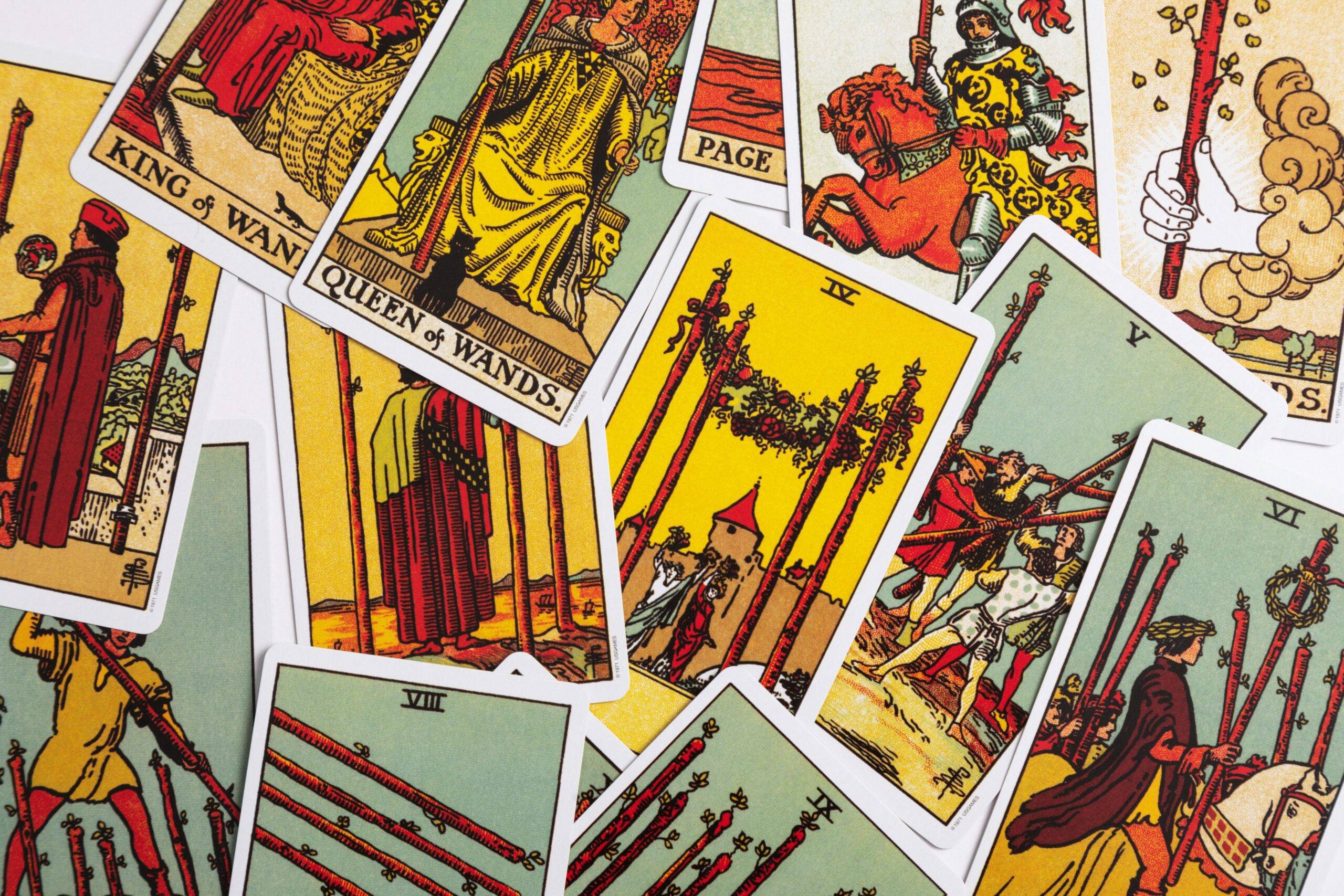
Time to take the ancient wisdom of the tarot out of the cards and into the world around us. Grab your curiosity, a notebook and a sense of adventure because we are about to go on a Tarot Symbol Scavenger Hunt. Whether you are strolling through bustling streets or wandering a quiet forest, this game will help you learn, remember and feel the deeper meanings of the Major Arcana as you walk.
Why Play The Tarot Scavenger Hunt?
Tarot is a language of symbols. The more you see those symbols in everyday life, the more instinctively they will speak to you when you draw a card. This hunt turns learning into a kinetic meditation, each step reinforces a memory, each discovery sparks a flash of insight. And the best part? You can play solo, at your own pace, in any setting that calls to you.

Preparation
- Pick Your Deck – Keep a compact deck nearby (or just a printed list of the 22 Major Arcana).
- Notebook & Pen – Jot down the symbol you find, where you found it and a quick feeling or thought.
- Smartphone – Use it for photos, GPS or a quick lookup if a symbol feels fuzzy.
- Safety First – Stay aware of traffic, wear comfortable shoes, bring water and let someone know where you’ll be.
- Set a Time Limit – 30‑60 minutes works well for a city block or a park loop, longer if you want a deeper trek.
The Scavenger Hunt Rules
- Choose a Starting Point – Any place you feel drawn to.
- Select a Card – Draw one Major Arcana from the deck or choose at random from the cheat sheet.
- Identify the Core Symbols – Each card has 3‑5 key images (e.g., The Fool: white rose, knapsack, cliff edge, dog, sun).
- Find Real World Equivalents – Spot objects, patterns or scenes that mirror those symbols.
- Record & Reflect – Write the match, snap a photo and note the emotion it stirs.
- Move On – When you have logged at least three matches for the card, draw the next one and repeat.
- Goal: Complete all 22 cards or as many as you can, within your time frame. Celebrate each discovery, the process is the magic.
Quick Guide To The Major Arcana Symbols
The following list is concise enough for a quick glance while you walk. Feel free to expand with personal associations.
Card core symbols (5 max) everyday look for examples
0 – The Fool: White rose, white dog, knapsack, cliff, sun White flower, friendly dog, backpack, a bridge or railing, a bright sunrise
I – The Magician: Wand, cup, sword, pentacle, infinity sign A streetlamp (wand), a drinking fountain (cup), a signpost (sword), a tiled floor (pentacle), an ∞ symbol on a wall
II – The High Priestess: Moon, veil, scroll, pomegranates, water, a crescent shaped window, a draped curtain, a bulletin board, red berries, a pond
III – The Empress: Crown, wheat, throne, heart, garden, a decorative hat, fields of grain, a park bench, a heart shaped sign, a lush garden
IV – The Emperor: Throne, scepter, mountains, armor, red robe, a stone column, a road sign, a hill, a police badge, a red flag
V – The Hierophant: Keys, triple crown, crosier, pillars, book, a key chain, three topped lampposts, a walking stick, a pair of columns, a library
VI – The Lovers: Twinned figures, rose, apple, sun, winged Cupid, two benches side by side, a rose bush, a fallen apple, a sunny clearing, a statue of a heart winged figure
VII – The Chariot: Wheels, sphinx, armor, stars, canopy, a bicycle, a statue of an animal, a construction helmet, a star mural, a covered awning
VIII – Strength: Lion, rose, infinity, crown, open hand, a mural of a lion, a single rose, an infinity symbol, a crown shaped sign, an outstretched hand sculpture
IX – The Hermit: Lantern, staff, mountain, cloak, star, a street lantern, a walking stick, a hill, a long coat, a glittering night sky
X – Wheel of Fortune: Wheel, sphinx, four figures, roses, clouds, a roundabout, a lion statue, four traffic lights, rose bushes, drifting clouds
XI – Justice: Scales, sword, throne, column, crown, a balanced scale sign, a sword shaped fence, a throne‑like seat, pillars, a crown shaped graffiti
XII – The Hanged Man: Inverted figure, rope, halo, tree, a hanging sign, a rope bridge, a halo like halo of light, a sturdy tree
XIII – Death: Skeleton, scythe, rose, sunrise, river, a skull sculpture, a mowing blade sign, a blooming rose, sunrise at a horizon, a flowing stream
XIV – Temperance: Angel, cup, water, fire, path, a statue of an angel, a water bottle, a fountain, a fire pit, a winding trail
XV – The Devil: Horns, chains, torch, goat, cage, a horn shaped sculpture, a chain link fence, a lantern, a goat statue, a cage like gate

XVI – The Tower: Lightning, falling figures, fire, crown, cracks, lightning shaped art piece, a toppled tower model, a fireplace, a broken crown shaped sign, cracked pavement
XVII – The Star: Star, water, bird, crown, night sky, a star shaped light, a reflecting pool, a bird feeder, a crown like street lamp, a dark sky with visible stars
XVIII – The Moon: Moon, dog, wolf, water, path, a crescent shaped garden arch, a dog park, a wolf mural, a pond, a winding path
XIX – The Sun: Sun, child, horse, sunflowers, a bright sun mural, a playground swing (child), a horse statue, a field of sunflowers
XX – Judgment: Angel, trumpet, rising figures, fire, clouds, an angel statue, a brass trumpet on a buskers stand, people climbing stairs, a bonfire, clouds overhead
XXI – The World: Wreath, dancing figures, four corners, stars, a circular fountain, a dance troupe poster, a compass rose, four street signs pointing cardinal directions, a sky full of stars
Tip: If you spot a symbol that doesnt match a card you have drawn, feel free to note it as a wild symbol, later you may discover a personal connection.
Reflection & Integration
Now that you have walked the path of symbols, take five minutes to flip through your notebook. Ask yourself:
Which card resonated most?
Did any symbol surprise you?
How did the environment shift your perception of the cards meaning?
If you wish, write a brief card journal entry, the card name, three symbols you found, a line of poetry or a single word that captures the vibe. This reinforces memory and deepens intuition.
Variations & Extensions
Nature Only Hunt. Choose a forest trail or beach, focus on natural equivalents (eg, a pine cone for the Pentacle, a flowing stream for Cups).
Urban Art Hunt. Seek murals, graffiti and architecture that echo tarot imagery.
Timed Challenge. Set a 15‑minute sprint: how many cards can you complete?
Seasonal Deck. Match the card’s elemental suit to the current season (eg, The Sun in summer, The Moon in autumn).
Audio Companion. Record a short voice memo for each symbol, later replay to reinforce auditory memory.
Turn it into a Party Game
Choose Your Hunting Ground
The hunt works anywhere you can hide or locate objects:
Indoors: living room, kitchen, bookshelf, office desk, backyard garden, park, coffee shop, library.
Hybrid: a mix of home and a nearby public space for added variety.
Make sure the space is safe and that you have permission to place or move items if you are in a public venue.

Gather Props
You will need physical representations of each symbol. The fun part is using everyday objects you already own:
- Cups & mugs for the suit of Cups.
- Swords or kitchen knives for Swords (handle with care!).
- Coins or small discs for Pentacles.
- Sticks, pens, or candles for Wands.
Special items like a tiny knapsack, a feather, a small rose, a miniature horse, a tiny clock, etc.
If you dont have an exact prop, get creative. A red marble can stand in for a ruby, a paper crane for a dove, a folded napkin for a cloth and so on. The key is that the object should be recognizable enough to trigger the intended symbol.
Hide the Symbols
Now comes the actual scavenger hunt setup. For each clue on your list, place the corresponding prop in a location that loosely reflects the card’s story or element. Example placements:
- The Fools knapsack on a doorstep, suggesting a journey about to begin.
- A white rose on a coffee table, indicating purity amidst daily routine.
- Three dancing figures (you could use three small figurines) near the TV, hinting at celebration.
- A cracked hourglass hidden behind a bookshelf for The Hermit (time for introspection).
Avoid making the hiding spots too obvious, the challenge should require a bit of thought, not a random guess.
Running the Game
Explain the Rules (Briefly)
- Goal: Find as many symbols as you can and match each to its Tarot card.
- Tools: Each participant gets a checklist, a pen, and optionally a small notebook for notes.
- Time limit: Set a reasonable window 30 minutes for a small hunt, up to 90 minutes for a full deck challenge.
- Scoring (optional): One point per correct match, bonus points for adding a keyword or short interpretation for the card.
Start the Search
Give everyone the checklist and let them scatter. Encourage participants to speak their thought process out loud (I see a silver spoon, could that be the Spoon in the Six of Cups?”). This verbalization reinforces learning.
Verification
When a participant claims a find, they should state:
The symbol they have located.
The Tarot card they believe it belongs to.
One keyword or short phrase that captures the cards essence.
The facilitator or a predesignated key master confirms the match. If the guess is close but not exact, use it as a teachable moment: thats a great connection to the Six of Cups, but the actual symbol we hidden was the child holding a flower, pointing to the innocence aspect of the card.

Wrap Up Discussion
When the timer dings, gather everyone and review the most challenging clues. Discuss:
How the symbols placement added meaning (eg, a cracked hourglass in a quiet corner emphasizes the solitary nature of The Hermit).
Any aha! moments where a symbol clicked with a personal experience.
Patterns that emerged, perhaps many participants gravitated toward water symbols when searching for Cups, reinforcing the emotional fluidity of that suit.
Turning Finds into Memory Tools
Finding a symbol is only half the battle, the next step is embedding its meaning into long term memory. Here are three techniques you can apply immediately after the hunt.
Create Mini Stories
Take the object you found, the card it represents, and weave a tiny narrative. Example: I found a tiny white feather tucked behind the plant. Thats the Fools feather, reminding me that stepping into the unknown requires lightness and optimism. The more personal the story, the stronger the recall.
Visual Anchor Cards
After the hunt, lay out the actual tarot cards next to the physical props you used. Spend a minute looking at the card, then at the prop, and verbally link the two (This cup is overflowing, just like my water bottle on the kitchen counter). This visual pairing solidifies the symbol meaning bridge.
Flash Card Review
Turn each found symbol into a flash card: front side shows a photo (or a quick sketch) of the prop, back side lists the card name, key symbols and three keywords. Review these flash cards daily for a week, gradually weaning off the prop image until the card alone triggers the meaning.
Common Pitfalls & How to Avoid Them
Too many props: Over crowding the space leads to confusion. Limit the hunt to 15–20 symbols per session, rotate in new ones later.
Ambiguous symbols: Some images (eg, a simple cup) could belong to multiple cards. Choose the most distinctive element (eg, a golden chalice for Ace of Cups, three cups for Three of Cups).
Dominating personalities: One person may monopolize clue explanations, silencing others. Enforce turn taking, use a talking stick or a simple rule that only the finder speaks.
Rushing the verification: Skipping deep discussion for speed. Keep verification brief but meaningful, one keyword is enough for the hunt, deeper talk can happen during the wrap up.
The Tarot scavenger hunt turns abstract symbolism into a tactile, lively experience. By moving through space, handling objects and crafting personal stories, you give each card a foothold in your everyday life. Whether you run a full deck quest over a weekend retreat or a quick suit focused sprint before a class, the core principle stays the same, search, find, connect, remember. Keep the hunt fresh by swapping props, rotating locations and inviting new participants. The more you play, the more naturally the symbols will surface when you lay the cards for a reading and the deeper your intuitive connection to the Tarot will become.
Now go, hide those roses, place those swords and let the hunt begin!