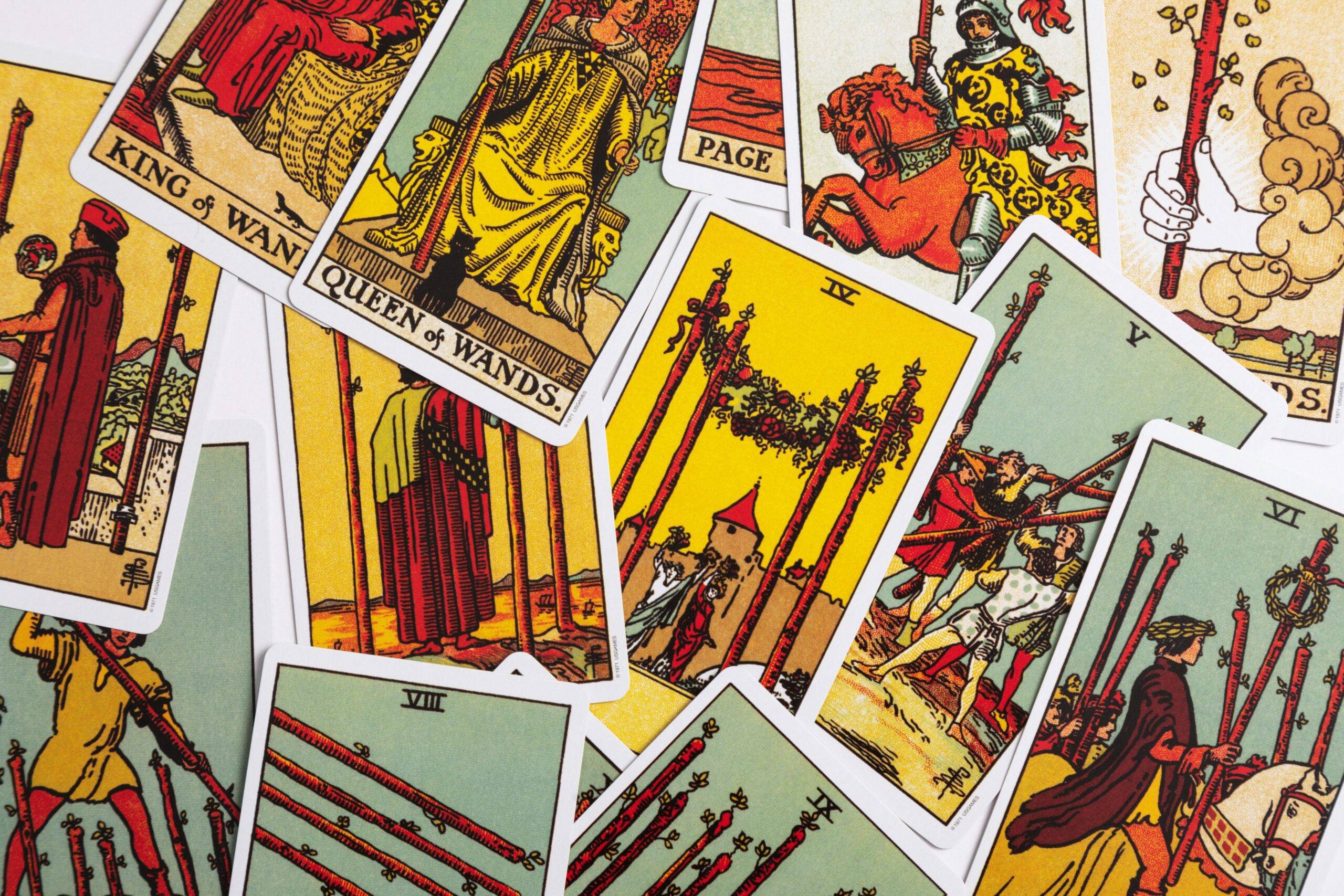
Learning Tarot? When you are just starting something new and suddenly, you are hit with this massive wave of information. It feels like theres just so much to learn, and honestly, it can be super overwhelming. Like, where do you even begin?
Feeling overwhelmed doesnt mean you are not cut out for it. It just means your brain is processing a lot, and maybe you need a few clever tricks to break things down.

Ground Yourself First
Tip Number 1: Start with a Clear Question or Intention.
This might sound super obvious but its probably one of the most overlooked steps when you are just starting out. When you are feeling overwhelmed, your mind can be racing with a million different thoughts. If you approach a reading with a vague idea like, whats going to happen? or tell me something interesting, you are likely to get equally vague or confusing answers. Instead, try to pinpoint what it is you really want to know. Maybe its, what can I focus on this week to help me feel more balanced? or whats one small step I can take to improve my study habits?
Taking a moment to formulate a specific, clear question acts like a compass. It gives your mind a direction and helps you laser focus your energy. It also makes interpreting your cards so much easier because you know exactly what you’re looking for. Dont worry about asking the perfect question right away, just practice making it as clear as possible. Even if it takes a few tries to get it right, thats totally fine, remember you are learning. The process of defining your question is part of the grounding itself.
Tip Number 2: Ground Yourself Before Shuffling
Okay, this one is huge. Before you even touch your cards, before you open that app or dive into that book, take a moment to just be. Life can be chaotic and we often carry that chaos with us. Trying to connect with something insightful when your mind is buzzing with homework, social drama or just general stress is like trying to hear a whisper at a rock concert. Its just not going to happen effectively.
So, how do you ground yourself? It can be super simple! Take a few deep breaths, really focusing on the air coming in and out of your lungs. You could light a candle and just watch the flame flicker for a minute. Maybe hold a favorite crystal or a smooth stone in your hand and feel its weight. Some people like to put on a specific song that makes them feel calm or maybe just close their eyes and count backwards from ten. Even just a quick stretch can help release some tension. The goal is to bring yourself into the present moment, calm your nervous system, and create a little bubble of peace around yourself. Theres no right or wrong way, its about finding what helps you feel centered.
Tip Number 3: Choose a Quiet Space, Physical or Mental.
This ties in perfectly with grounding. When you are learning something new, especially something that requires intuition and focus, distractions are your worst enemy. If you are trying to read cards while your little brother is playing video games loudly next to you, or your phone is constantly pinging with notifications, its going to be tough.
Ideally, find a physical space where you wont be interrupted. This could be your bedroom, a quiet corner of the house or even outside if the weather is nice. If a physical quiet space isn’t always possible (and lets be real, sometimes it isnt!), then create a mental quiet space. This is where those grounding techniques come in even handier. Put on headphones with some calming instrumental music, close your eyes for a minute, and mentally block out the noise around you. Its about creating an internal sanctuary where you can focus without interference. This allows your mind to relax and be more open to subtle insights.
Tip Number 4: Dont Read When You are Emotionally Overwhelmed.
This is probably one of the most important pieces of advice I can give you and its something I still remind myself of sometimes. When your emotions are running high whether its anger, sadness, extreme anxiety or even overwhelming excitement, your judgment can be clouded. If you try to do a reading when you are in a highly emotional state, two things often happen, first, its really hard to be objective. You might project your current feelings onto the cards, interpreting them through a lens of your emotional state rather than seeing them clearly. Second, you might just get more confused or even upset, because the information you’re receiving is filtered through your emotional turmoil.
Think of it like trying to solve a complicated math problem when you are super tired or really stressed out. Its just not going to work well. Instead, if you find yourself feeling totally overwhelmed, take a break. Go for a walk, listen to music, talk to a friend, watch a comfort show, whatever helps you process your emotions and come back to a more balanced state. Your practice will be much more helpful and insightful when you approach it from a place of relative calm. This is an act of self care and self respect!
Tip Number 5: Keep a Tarot Journal From Day One.
Okay, if you take away nothing else from this section, please, please, please start a journal! It might sound like extra work, but it is an absolute game changer for beginners. As soon as you start engaging with your cards or any new practice, jot things down. This doesnt have to be fancy, a simple notebook or a digital document works perfectly.
What should you write? Anything and everything!
- Your questions: Write down the question you asked before your reading.
- The cards you drew: Note which cards appeared in your spread.
- Your initial impressions: Before you even look up meanings, what do you feel or think when you see the cards? This is your intuition speaking!
- Keywords or traditional meanings: After you look them up, add the meanings that resonate with you.
- Your interpretation: How do all the cards together answer your question? What insights did you gain?
- Your feelings: How did the reading make you feel? Did it resonate? Did it confuse you?

Why is this so important? Firstly, it helps you track your progress. You will be amazed at how quickly you start to recognize patterns and develop your own interpretive style. Secondly, its a powerful tool for learning and reflection. You can look back weeks or months later and see how a situation evolved or how your understanding of certain cards changed. Its like creating your own personal textbook, tailored precisely to your journey. And perhaps most importantly, journaling helps you remember that initial feeling of overwhelm and how far you’ve come. It’s a wonderful record of your growth.
By taking a few moments to ground yourself, clarify your intentions, find a quiet space, respect your emotional state, and journal your experiences, you are building a super strong foundation for your journey.
Start Simple, Stay Consistent
Tip Number 6: Begin with 1 card daily pulls
Seriously, this is a game changer. Forget those intimidating multi card spreads for now. Just pick one card, every single day if you can. Its less pressure, right? You are not trying to weave a complex narrative, you are just focusing on one message, one symbol, one feeling. For me, this was how I built up my confidence. I would pull a card in the morning, look at it, maybe think about what it could mean for my day and then check in with it later. It helped me feel like I was actually doing something, without getting bogged down. Its a low stakes way to connect with your deck and yourself and its surprisingly effective at building familiarity.
Tip Number 7: Use a basic Rider Waite Smith deck
I know, I know, there are so many gorgeous, unique decks out there and its tempting to grab the one that perfectly matches your aesthetic. But trust me on this one, start with a basic Rider Waite Smith deck. Why? Because the RWS system is like the foundational language that almost every other deck builds upon. Its imagery is incredibly iconic and rich with symbolism, which means there are tons of resources, books, and online communities dedicated to helping you understand these specific cards. When I picked up my first RWS deck, it was like unlocking a universal key. All the learning materials suddenly made sense, and it made connecting with the card meanings so much easier. You can always get that super cool, artsy deck later, once you have got a solid foundation.
Tip Number 8: Dont worry about reversals yet.
If you have ever seen a card interpretation, you might notice theres an upright meaning and then an inverted or reversed meaning. When I first started, I thought I had to learn both for every single card and it doubled my workload instantly! Dont do that to yourself. For now, just focus on the upright meanings. Most cards have a spectrum of interpretation even in their upright position, they can be positive, challenging or neutral depending on context. You can learn to read the shadow or challenging aspects of a card even without turning it upside down. Removing the pressure of reversals means you are only learning 78 meanings instead of 156 and that makes a huge difference to your confidence and prevents that overwhelming feeling from creeping back in.
Tip Number 9: Focus on learning the major Arcana first
Okay, so a standard deck has 78 cards. Thats a lot! But its generally split into two main groups, the Major Arcana and the Minor Arcana. The Major Arcana cards, often numbered 0 through 21 (like The Fool, The Magician, The High Priestess), represent the big life lessons, major events and spiritual archetypes. There are only 22 of them and they are powerful. By focusing on these first, you’re tackling the most impactful cards and building a strong understanding of the overarching themes of life’s journey. I found that once I had a grasp on these 22, the Minor Arcana, which deal with more everyday situations, felt much less intimidating because I already had the big picture in my mind.
Tip Number 10: Pick 3 cards to learn deeply each week.
This is a super practical tip. Instead of trying to cram a whole suit or even all the Major Arcana at once, just commit to really getting to know three cards each week. Spend time with them. Look at their imagery. Read different interpretations. Think about how they relate to your own life or experiences. Maybe even journal about them. By the end of the week, those three cards will feel like old friends. Then next week, pick three new ones. This slow, steady approach might seem like it takes longer, but it leads to deeper understanding and much better retention than trying to force feed yourself information.

Tip Number 11: Use sticky notes or keywords on your cards at first.
Yes really! This might sound a bit unconventional, but its incredibly effective when you are just building your memory. Grab some small sticky notes, or even just write directly on the card box or a sleeve if you are using them. Jot down one or two keywords or a super brief phrase for each card that resonates with you. For example, for The Fool, you might write new beginnings or leap of faith. For The Magician, maybe manifestation or skill. These little prompts act as quick mental cues. They are not meant to be permanent, but they bridge the gap between seeing the card and recalling its core meaning, especially when you’re doing those daily pulls. It’s like having training wheels on your bike, super helpful until you find your balance.
Tip Number 12: Create your own cheat sheet.
This was probably my favorite thing to do! Instead of relying solely on books or apps, start building your own personalized cheat sheet. You can use a notebook, a digital document or even index cards. For each card, write down your own interpretation, the keywords that you connect with and maybe even a little doodle or symbol that helps you remember it. As you learn more, you can add more details, explore different aspects or even note down personal experiences where a cards meaning clicked for you. This isnt just about having a quick reference, its an active learning process. By creating it yourself, you are engaging with the material on a deeper level, and it becomes a reflection of your unique journey. Its completely tailored to how your brain works!
Build Your Card Confidence
Tip Number 13: Treat each card like a character with a story.
Think about your favorite TV show or book. Each character has their own personality, their own past, their own unique role in the story, right? Do the same thing with your cards! Dont just look at it as a picture; imagine it’s a person, or a place, or an idea with its own distinct vibe. What kind of energy does it bring? What might this character be doing, or feeling, or thinking? When you start seeing each card as a tiny story waiting to be told, it suddenly becomes way less intimidating and way more interesting. Its like meeting new people, some you’ll click with instantly, others will take a bit more time to understand, but they all have something unique to offer.
Tip Number 14: Use real life examples to understand meanings.
Sometimes, the descriptions or meanings associated with cards can feel really abstract. So, instead of trying to force yourself to remember a dictionary definition, think about how that meaning plays out in everyday life. For example, if a card represents new beginnings, think about a time you started something new, maybe a new job, a new sport, or even just trying a new food. How did that feel? What did you do? If a card represents challenge, think about a challenge you’ve faced, maybe a tough exam or a tricky situation with a friend. How did you overcome it? Connecting the card’s essence to your own experiences makes it stick in your mind because it’s personal and real to you.
Tip Number 15: Ask whats the mood or emotion in this card?
Before you even think about looking up a meaning or symbol, just pause and look at the card. Whats the first feeling it sparks in you? Does it look happy, sad, calm, chaotic, adventurous, quiet? Does it make you feel excited or a little nervous, or peaceful? Our emotions are super powerful and they can tell us a lot. Often, the mood or emotion you pick up on instinctively is a huge clue to what the card might be trying to communicate. Its like listening to a piece of music, you dont need to know the composer or the instruments to feel its general vibe.

Tip Number 16: Draw your own version of a card to connect with it.
You dont have to be an amazing artist for this, seriously! Just grab a piece of paper and some pencils or crayons. Pick a card that you find particularly confusing or one that really intrigues you. Now try to draw your own simplified version of it. What are the key elements you would include? What colors would you use? When you engage with a card in this way, you are not just passively looking, you are actively interpreting and internalizing its symbols and message. Its a fantastic way to deepen your understanding and forge a personal connection with it, making it less of a stranger and more like something you have personally brought to life.
Tip Number 17: Talk to the cards, literally!
Yes, I know it sounds a bit out there but hear me out. Imagine you are talking to a wise friend or someone who has a message for you. When you draw a card, hold it and just talk to it. Ask it questions. Say okay card, what are you trying to tell me today? Or what message do you have for my week? You might feel silly at first, but this simple act can really open up your mind. It encourages a dialogue, making your interaction with the cards less about strict interpretation and more about a conversation, which is much less pressured. It helps you see them as tools for communication, not just static images.
Tip Number 18: Try intuitive reading: what do you feel before looking up meanings?
Before you rush to a book or a website to find out what a card means, take a moment. Hold the card, look at it and just ask yourself, what do I think this means? Whats the first thought or feeling that comes to mind? Write it down or just keep it in your head. Then and only then, go look up the traditional meanings. You might be surprised how often your initial intuition aligns with or at least points in the direction of the established meaning. This practice builds confidence in your own inner wisdom and helps you realize that a lot of the answers are already within you.
Tip Number 19: Dont memorize, relate.
This is probably the most crucial one. Trying to memorize a long list of meanings for every single card is a recipe for overwhelm and frustration. Instead, focus on building relationships with the cards. Think of it like meeting new people, you dont memorize their life story right away. You get to know them over time, understanding their personality, their quirks and how they fit into your world. Similarly, with your cards, try to understand the core essence, the feeling, the story and how it relates to you and your life. The more you interact with them, the more those meanings will just naturally click into place because you will have a personal connection to them, not just a rote memory.
Learn to Love the Spreads
Tip Number 20: Stick to 1 or 3 card spreads in the beginning.
Seriously, less is more when you are learning. If you are trying to interpret ten or twelve cards all at once, your brain is going to go into overload. Its like trying to learn a whole new language by reading an entire novel on day one! Instead, start small. A single card can give you a really clear answer or a strong theme for the day. It helps you focus on understanding one message deeply. A three card spread is perfect for exploring a simple narrative, like past, present and future or situation, challenge and advice. By limiting the number of cards, you give yourself space to really connect with each one, build your interpretation muscles, and avoid that frustrating feeling of being completely lost in a sea of information. Plus, nailing a simple spread feels awesome and builds your confidence!

Tip Number 21: Invent your own spreads based on your questions.
Who says you have to follow every rule in the book, especially when you are just starting? You are the one driving this journey! If you have a specific question or situation you want to explore, why not create a spread that perfectly fits it? For example, lets say you are trying to decide what after work activity to join. You could invent a three card spread, card 1: what I need to consider, card 2: what I might gain, card 3: what might be a challenge. Or maybe you are thinking about a friendship, you could have card 1: how I feel about it, card 2: how they might feel, card 3: what step to take next. When you invent your own spreads, you make the process incredibly personal and relevant to your life, which often leads to clearer insights. It also helps you think more deeply about your questions, which is a powerful practice in itself.
Tip Number 22: Understand card positions: past/present/future, situation/action/outcome.
Even if you are inventing your own spreads, you will notice that many traditional spreads use specific positions for cards and understanding these can be a game changer. Its not just about what each individual card means but what that card means in that particular spot. For instance, if you are doing a past/present/future spread, the card in the past position sheds light on the influences leading up to now, while the future card points to potential outcomes. Similarly, in a situation/action/outcome spread, the situation card defines the current context, the action card suggests what steps to take and the outcome card shows where those actions might lead. Knowing these general archetypes for positions helps you build a narrative from your cards, rather than just seeing a bunch of isolated messages. Its like understanding the role of each character in a story!
Tip Number 23: Its okay if some cards dont make sense at first.
Seriously, its going to happen. You will pull a card, place it in a spread and think, wait, what? How does that relate to my question? Your brain might immediately try to force a connection or you might feel like you’ve done something wrong. Stop right there! This is totally normal. Sometimes the meaning isnt immediately obvious and thats usually because the card is trying to tell you something you havent considered yet or its speaking to a deeper, subconscious part of you. Dont panic. Jot it down, move on and revisit it later. Often the meaning will click into place hours or even days, later when you are not actively trying to figure it out. Give yourself permission for things to be a bit fuzzy sometimes. Thats part of the learning process.
Tip Number 24: Dont force connections, let them come naturally.
This goes hand in hand with cards not making sense. When you get a card that seems off, your first instinct might be to jam it into your preconceived idea of what the answer should be. Resist that urge! Forcing connections usually leads to interpretations that don’t quite resonate, or worse completely contradict the actual message. Instead take a deep breath. Look at the card. What are the first feelings or ideas that pop into your head, even if they seem unrelated? Let your intuition have a moment to breathe and offer its insights without judgment. Sometimes, the connection is subtle or it requires you to look at your situation from a slightly different angle. Trust that those insights will emerge when they’re ready.
Tip Number 25: Keep a notebook of spreads you like or invent.
This is such a simple yet powerful practice. Get a dedicated notebook, maybe one you really love the look of and use it to record your favorite spreads, whether they are traditional ones you learn about or ones you have invented yourself. Draw out the layout, label the positions and write down the questions or intentions you use with each spread. This notebook becomes your personal reference guide, a record of your journey and a fantastic tool for growth. You can also note down how certain spreads worked for you, or ideas for improving your invented ones. Its a space to track your progress, solidify your understanding, and always have inspiration at your fingertips. Trust me, future you will thank present you for starting this!

Trust The Process
Tip Number 26. You wont get every reading, and thats okay.
Whatever it is you are learning, whether its understanding a complex text, decoding a new language or even grasping a new game strategy, there will be moments, days, maybe even weeks, where certain concepts just dont click. And that is perfectly, 100% fine. Your brain isn’t a supercomputer designed to instantly download all information. It needs time to process, connect dots and reflect. Dont beat yourself up if something goes over your head. Just note it, maybe try to approach it from a different angle later and move on. The understanding will often come in waves, not all at once.
Tip Number 27. The more you practice, the more confident you will become.
This might sound super obvious, but its easy to forget when you are feeling stuck. Confidence isnt something you are born with, its built through repeated effort. Think of it like building muscle. The first few reps are hard, your form might be off, you might feel weak. But the more you lift, the stronger you get and the more confident you feel in your ability to lift. Its the same with any skill. Each time you practice, you are not just getting better at the skill, you are also building a reservoir of personal proof that you can do it. That proof fuels your confidence.
Tip Number 28. Your intuition is just as important as traditional meanings or rules.
This is a big one, especially if you are in a creative field or something that involves interpretation, like writing, art or even understanding people. While its super important to learn the fundamentals, the rules or the traditional interpretations, remember to also listen to your gut. What does it feel like to you? What connections are you making? Sometimes, your unique perspective or intuitive understanding will lead you to insights that strict adherence to rules might miss. Dont dismiss your inner voice just because it doesnt perfectly align with what you have read in a book or seen an expert do. Your intuition is a powerful tool, learn to trust it and blend it with your knowledge.
Tip Number 29. Avoid comparing your journey to others.
Seriously, this is a trap! Its so easy to scroll through social media or look at someone else who seems to be effortlessly crushing it and think, ugh, why am I not that good? Why am I not learning that fast? Stop right there! Everyones learning journey is unique. We all start at different places, have different strengths and learn at different paces. What you see online is often just the highlight reel, not the countless hours of struggle and practice. Your progress is your progress. Focus on your own growth, celebrate your own small wins and stay in your own lane. Comparison is the thief of joy and its also the thief of motivation when you are a beginner.
Tip Number 30. Whatever you are learning, treat it as a conversation, not a test.
This is a fantastic way to reframe your approach. If you are constantly viewing your learning as a test, where you either pass or fail, you’ll naturally feel a lot of pressure and anxiety. Instead, imagine you are having a conversation. You are asking questions, exploring ideas, making new connections, sometimes you get it, sometimes you ask for clarification, sometimes you offer your own thoughts. Its a dynamic, ongoing dialogue, not a pass/fail exam. This shift in mindset makes the process so much more enjoyable, less stressful, and surprisingly, more effective for genuine understanding. You are not trying to prove yourself, you are simply engaging with something new.
Remember, every expert was once a beginner. They felt the overwhelm too! The difference is they kept going, they trusted the process, and they allowed themselves to learn and grow.
You are doing great just by showing up and trying. Be kind to yourself, break things down, embrace the messy parts, and most importantly, trust that with practice and patience, you’ll find your rhythm.